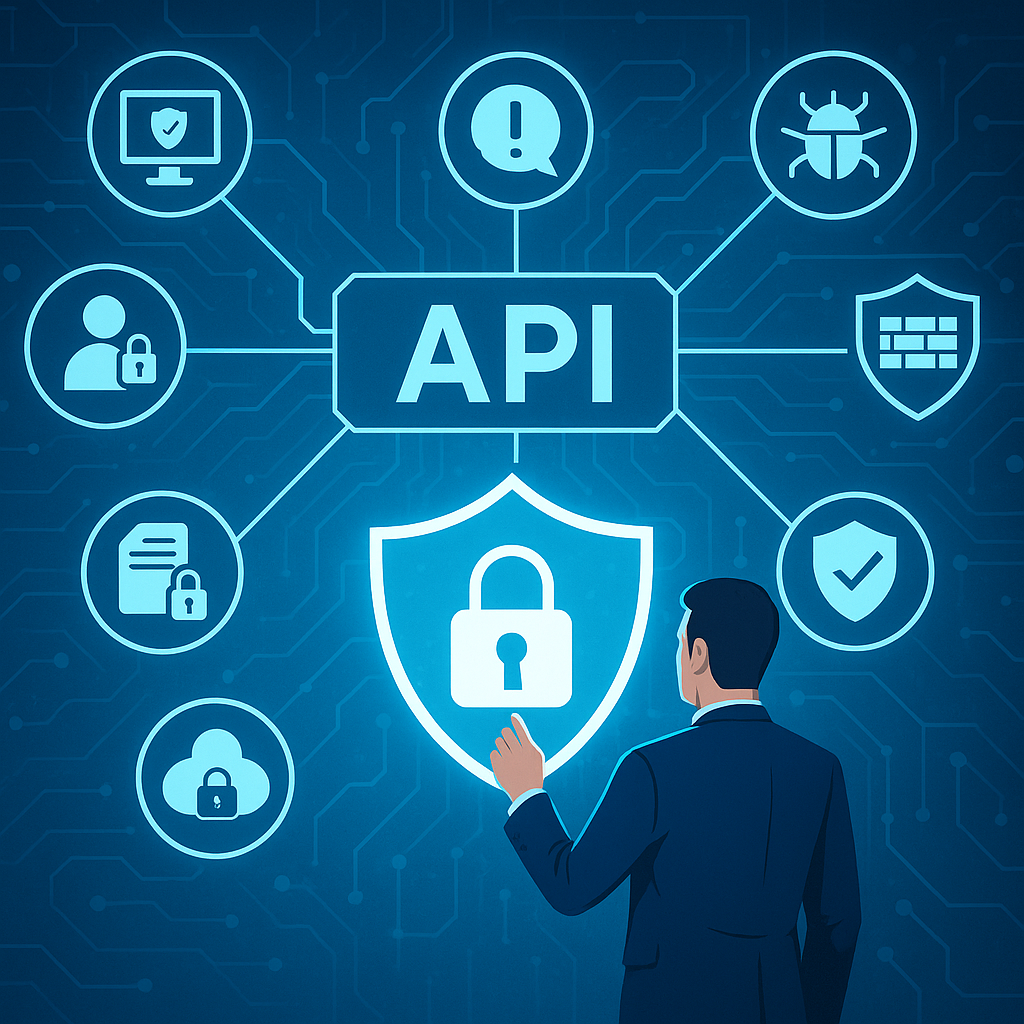
1. API Breaches Happen Because Developers Aren’t Trained in Secure API Design
Many API vulnerabilities originate during development:
- Missing authentication
- Missing authorization
- Overly permissive endpoints
- Broken object-level authorization (BOLA)
- Direct object references (IDOR)
- Lack of input validation
- No rate limits
- Too much data returned in responses
- Unsafe error messages
These aren’t attacker innovations — they’re basic design mistakes caused by lack of training.
CloudCamp Training Focus:
Secure API design workshops based on OWASP API Security Top 10.
2. Teams Don’t Understand API Authentication & Authorization Patterns
Most engineers know basic authentication, but real-world API security requires deeper patterns:
- OAuth 2.0
- OpenID Connect
- mTLS
- JWTs and token validation
- Role-based and attribute-based access control
- Service-to-service identity
- API gateway vs backend-level auth
When teams lack these skills, APIs become fragile and exposed.
CloudCamp Training Focus:
Hands-on labs implementing secure authentication patterns in your cloud environment (Azure, AWS, GCP).
3. API Gateways Are Configured Incorrectly
API gateways (APIM, API Gateway, Apigee, Kong, NGINX) are powerful — but often misconfigured:
- Missing throttling
- Missing schema validation
- Inconsistent CORS rules
- Pass-through authentication
- Overly permissive routes
- Disabled logging
Gateways magnify gaps when teams haven’t been trained to use them properly.
CloudCamp Training Focus:
Gateway configuration training mapped to your existing API management stack.
4. DevOps & Platform Teams Introduce API Misconfigurations Through Automation
IaC pipelines and GitOps workflows can accidentally deploy insecure APIs at scale:
- Default-open firewall rules
- Missing managed identities
- Public endpoints exposed by mistake
- Security headers dropped during deployment
- Misconfigured network paths
Automation makes small mistakes big.
CloudCamp Training Focus:
Secure DevOps practices for API deployment, IaC scanning, and GitOps security.
5. Lack of API Monitoring Skills Leaves Blind Spots
Many teams do not know how to properly monitor APIs:
- No anomaly detection
- Missing authentication logs
- No rate limit monitoring
- No request/response validation
- No detection for privilege escalation
- No API-specific SIEM rules
Without observability, attacks go undetected for months.
CloudCamp Training Focus:
API observability workshops using your SIEM and cloud-native monitoring tools.
6. Teams Don’t Test APIs for Security — Only Functionality
Traditional QA tests:
- Does the endpoint return the correct data?
- Does the app behave as expected?
But they do NOT test:
- Whether endpoints leak data
- Whether unauthorized access is possible
- Whether rate limits work
- Whether tokens can be reused
- Whether error messages expose internals
Security must be part of QA’s skillset too.
CloudCamp Training Focus:
API security testing training using tools like Postman, Burp Suite, and automated scanners.
7. API Security Requires Collaboration Across Multiple Teams
API security fails when teams work in silos:
- Developers create APIs
- DevOps deploys them
- Security reviews them too late
- Operations monitor them with limited context
API security requires shared training so every team understands their role.
CloudCamp Training Focus:
Cross-functional API security enablement for Dev, Sec, Ops, Platform, and Cloud teams.
Conclusion
API breaches aren’t caused by advanced attackers.
They’re caused by:
- Missing skills
- Lack of secure design knowledge
- Misconfigurations
- Poor gateway usage
- Insufficient monitoring
- Lack of role alignment
API security is a skills problem — and training is the solution.
CloudCamp helps enterprises build API security capability across development, DevOps, cloud engineering, and security teams using hands-on training in real environments.