
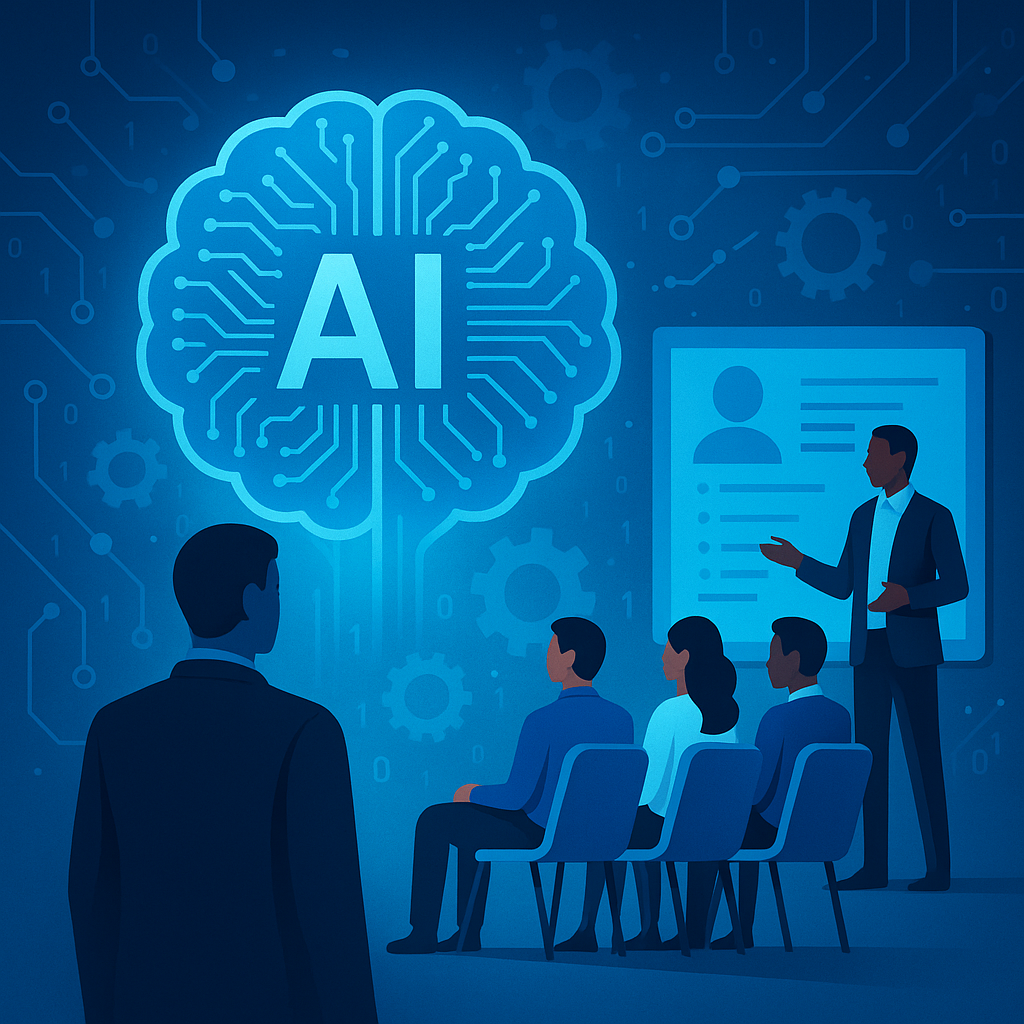
The Hidden Risks of AI Adoption — And Why Team Training Matters More Than Tools

Insights from CloudCamp

November 20, 2025

AI is being adopted faster than any technology in modern history. From customer support automation to AI-generated code, forecasting, threat detection, and workflow optimization — AI is rapidly reshaping how enterprises operate. But while AI tools are evolving quickly, most organizations overlook the single biggest risk in AI adoption: People using AI without training, governance, or understanding of its limitations. At CloudCamp, we’ve seen organizations invest heavily in AI platforms — only to create new risks because teams were not trained to use AI responsibly, safely, and effectively. Here are the hidden risks of AI adoption — and why team training matters more than the tools themselves.

1. AI Hallucinations Can Lead to Bad Business Decisions

AI systems can generate output that appears confident but is factually wrong, incomplete, or biased.

In enterprises, hallucinations can lead to:

  • Incorrect financial analysis
  • Misleading compliance summaries
  • Faulty engineering recommendations
  • Wrong code snippets deployed to production
  • Misinterpreted legal or policy guidance

Without training to validate and challenge AI output, employees unknowingly introduce errors into critical processes.

Training Focus:
CloudCamp teaches teams how to detect hallucinations, validate outputs, and apply human-in-the-loop practices.

2. Shadow AI Creates Security, Privacy, and Compliance Risks

Employees often adopt AI tools before IT, security, or compliance teams are aware of them.

Shadow AI can lead to:

  • Sensitive data being pasted into public AI models
  • Privacy violations (GDPR, HIPAA)
  • Leakage of internal intellectual property
  • Inconsistent model use across teams
  • Audit failures due to untracked AI usage

Organizations must build AI governance frameworks and train teams on approved usage patterns.

Training Focus:
CloudCamp integrates governance and responsible AI guardrails into every training program.

3. AI-Assisted Coding Introduces Vulnerabilities

Tools like GitHub Copilot and ChatGPT accelerate development — but can also generate:

  • Insecure code
  • Outdated libraries
  • Incorrect cloud configurations
  • Missing validation or encryption patterns

Developers must be trained to:

  • Review AI-generated code
  • Understand security implications
  • Apply DevSecOps policies
  • Validate CI/CD pipelines

Training Focus:
CloudCamp teaches teams how to integrate AI into DevOps safely, using their real pipelines.

4. AI Bias Can Impact Decisions and Harm Customers

AI models can amplify bias due to:

  • Skewed training data
  • Incomplete context
  • Poorly defined prompts
  • Lack of diverse review processes

Biased AI creates risk in:

  • Hiring
  • Fraud detection
  • Credit scoring
  • Customer support
  • Product recommendations

Enterprises must train teams to understand bias and implement mitigation strategies.

Training Focus:
CloudCamp’s Responsible AI module teaches bias detection, ethical decision-making, and fairness frameworks.

5. Over-Reliance on AI Reduces Human Critical Thinking

When employees trust AI output blindly:

  • Errors go unnoticed
  • Review processes weaken
  • False positives/negatives increase
  • Team capability declines over time

AI should augment — not replace — human reasoning.

Training Focus:
CloudCamp trains teams to question AI output, validate facts, and apply domain expertise.

6. Lack of Role-Based AI Skills Creates Adoption Gaps

AI isn’t “one skill.”
Different roles need specific enablement:

🔹 Leadership

Strategy, governance, ROI, ethical risk.

🔹 Engineering

AI-enabled DevOps, MLOps, secure code generation.

🔹 Operations

Automation, incident detection, reporting.

🔹 Business Teams

AI-assisted workflows, data interpretation, prompt engineering.

🔹 Security

Threat modeling for AI systems, monitoring, policy creation.

If training is not role-specific, adoption remains uneven and inconsistent.

Training Focus:
CloudCamp delivers role-based tracks tailored for each team.

7. AI Adoption Without Governance Leads to Chaos

AI tools move faster than policies.

Enterprises need:

  • AI usage guidelines
  • Data privacy rules
  • Tool approval workflows
  • Model risk scoring
  • Responsible AI principles
  • Continuous monitoring and auditability

Governance gaps are one of the top causes of AI program failure.

Training Focus:
CloudCamp helps organizations build governance frameworks tied to cloud, security, and compliance requirements.

Conclusion

AI tools alone are not enough — the real differentiator is people.

Organizations that invest in AI training gain:

  • Higher productivity
  • Safer adoption
  • More accurate decision-making
  • Stronger compliance posture
  • Responsible and ethical use
  • Faster innovation

Organizations that skip training face:

  • Shadow AI
  • Compliance violations
  • Security breaches
  • Inaccurate outputs
  • Biased decisions
  • Operational instability

AI capability is built through education, governance, and hands-on practice — not technology alone.

CloudCamp helps enterprises adopt AI safely and effectively by training teams in real workflows, real tools, and real governance.

Explore More Ingishts:

A group of six diverse coworkers engaged in a meeting around a table in a modern office.

We built a 3-day Azure DevOps Enablement Program for a public agency team migrating to GitHub.

Book a Discovery Call