
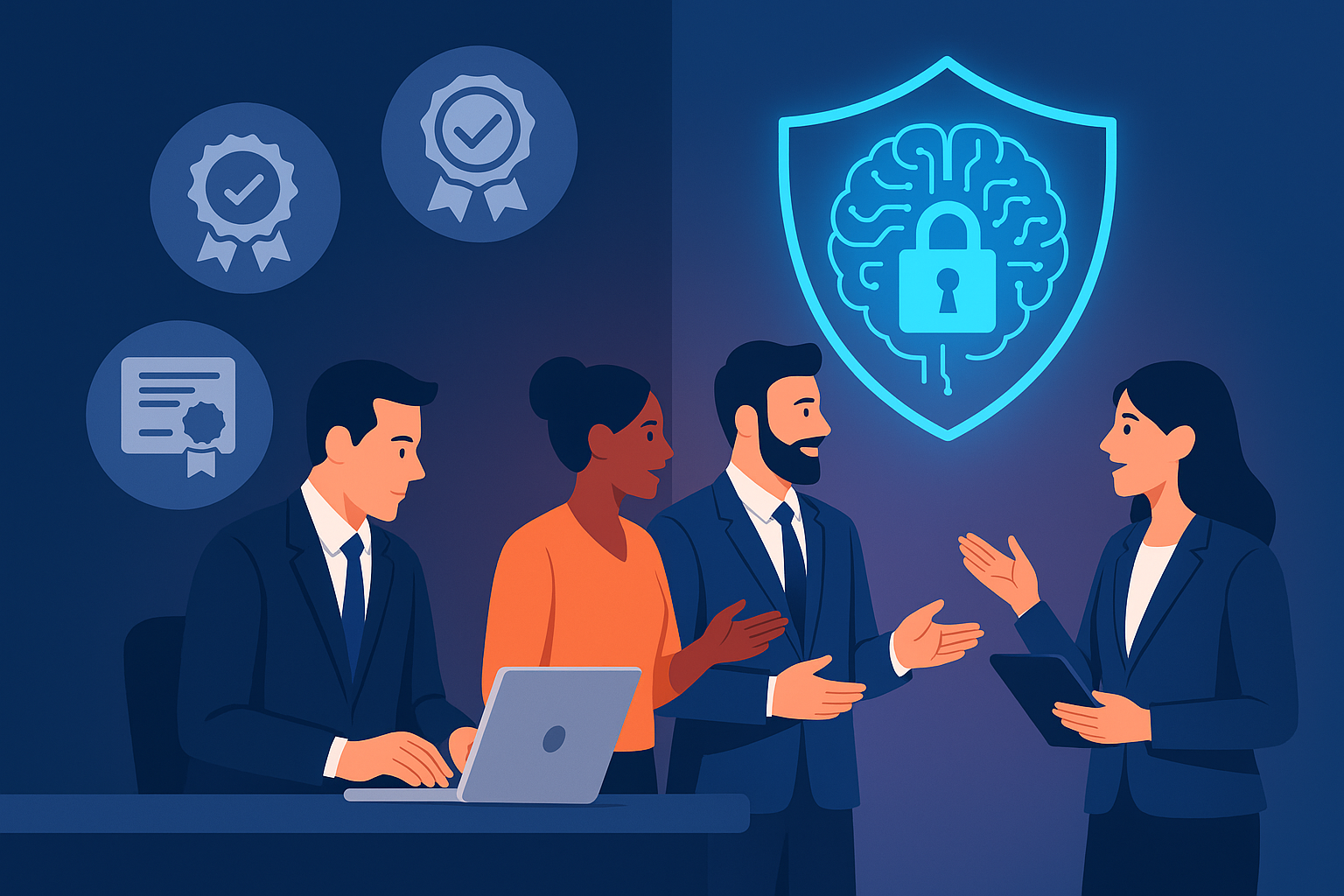
Security Certifications vs Corporate Training: What Builds Real Resilience?

Insights from CloudCamp

November 6, 2025

For years, organizations have relied on certifications to prove technical expertise in security. But while certifications validate knowledge, they rarely build the habits, context, and collaboration needed to make a company truly secure. At CloudCamp, we’ve learned that the path to resilience isn’t just about earning credentials—it’s about creating cross-functional, context-aware teams who can respond, adapt, and protect in real-world scenarios.

1. Certifications Are About Knowledge—Not Capability

Security certifications (CISSP, CEH, or CompTIA) are valuable for individuals—they test understanding of principles and frameworks.
But they don’t teach teams how to apply those principles in your organization’s cloud, DevOps, or compliance ecosystem.

Why certifications alone fall short:

  • They’re designed for individuals, not teams.
  • They teach general theory, not enterprise-specific practices.
  • They focus on exam success, not incident response.

In short, certifications build awareness, not operational resilience.

2. Corporate Security Training Focuses on Context

Real-world security challenges aren’t solved by checklists—they’re solved through understanding context.
Corporate training embeds security knowledge into your organization’s workflows, tools, and governance model.

CloudCamp’s approach integrates:

  • Your cloud environment (Azure, AWS, or GCP).
  • Your compliance obligations (ISO 27001, SOC 2, GDPR).
  • Your existing DevOps pipelines and automation systems.

This ensures that every training session improves your team’s actual security posture, not just theoretical understanding.

3. Collaboration Is the Key to Enterprise Security

Cybersecurity is a team sport.
Resilience depends on how well teams communicate across departments—not how many certifications they hold.

Our workshops are built to:

  • Encourage collaboration between security, development, and operations.
  • Simulate incident response scenarios in your environment.
  • Build shared accountability between IT and leadership.

When everyone understands their role in security, vulnerabilities are identified and mitigated faster.

4. Training Builds Culture—Not Just Skills

Security resilience isn’t a product or certificate—it’s a culture.
Corporate security training helps establish that culture through repeated, contextual learning.

It empowers:

  • Developers to embed security early (DevSecOps mindset).
  • Operations teams to handle vulnerabilities effectively.
  • Leaders to make governance and compliance part of decision-making.

Culture is what turns knowledge into action.

5. Measuring the Impact of Training

The best measure of success isn’t the number of certifications—it’s how your organization performs under pressure.
We help enterprises measure training outcomes through:

  • Reduced incident response time.
  • Improved audit readiness.
  • Fewer compliance gaps and misconfigurations.
  • Stronger collaboration across teams.

That’s what real resilience looks like.

Conclusion

Security certifications prove knowledge; corporate training builds readiness.
When your teams learn in your environment—with your risks and goals in mind—you don’t just build compliance—you build confidence.

At CloudCamp, we help organizations move from certification to capability, culture, and resilience.

Explore More Ingishts:

A group of six diverse coworkers engaged in a meeting around a table in a modern office.

We built a 3-day Azure DevOps Enablement Program for a public agency team migrating to GitHub.

Book a Discovery Call