
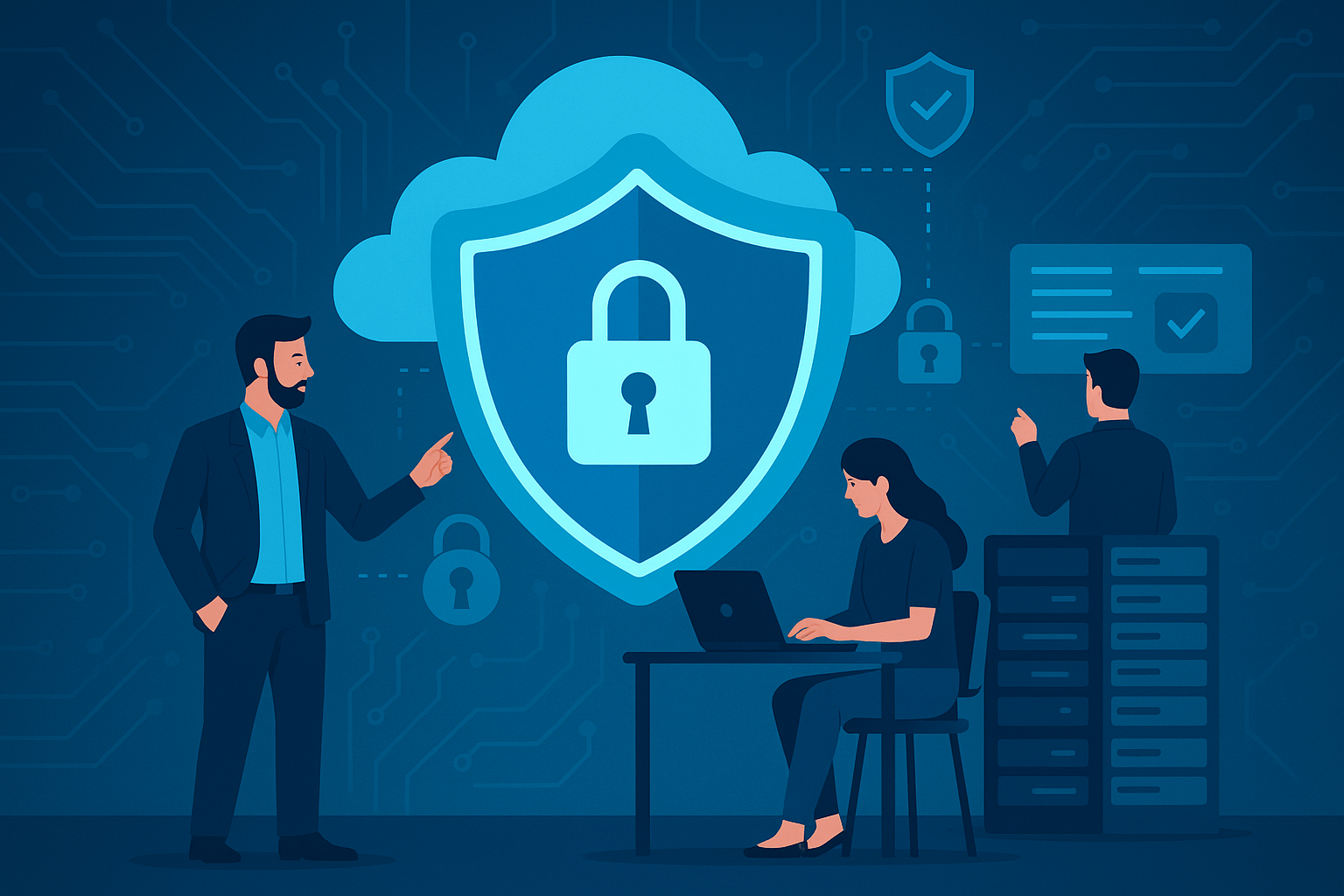
Beyond Firewalls: Building Security Resilience in the Cloud Era

Insights from CloudCamp

November 16, 2025

Cybersecurity has changed more in the last five years than in the previous twenty. Cloud adoption, distributed teams, AI-powered threats, and complex integrations have pushed organizations to rethink how they protect their environments. Yet most enterprises still focus on tools over people. They buy firewalls, SIEMs, scanners, and endpoint solutions — but overlook the most critical part of modern security: security resilience built through skilled, trained teams. At CloudCamp, we help organizations build that resilience through customized, cross-department, cloud-aware security training.

1. Firewalls Don’t Stop Human Risk

Firewalls can block attackers — but they can’t block:

  • Misconfigurations
  • Weak IAM policies
  • Poor data handling
  • Shadow IT
  • Missing patches
  • Phishing clicks
  • Bad pipeline security

The majority of breaches today come from human-driven or process-driven failure, not network perimeter failures.

This is why security resilience must start with training, not tools.

2. Cloud Has Eliminated the Traditional Perimeter

In the cloud era, your “perimeter” is:

  • Identity & access management
  • Application code
  • CI/CD pipelines
  • API permissions
  • Terraform templates
  • SaaS integrations

Traditional security training doesn’t address these areas.
CloudCamp’s training does — because we teach security inside real cloud and DevOps workflows, not in isolation.

3. Resilience Requires Cross-Functional Security Skills

Security resilience cannot come from the security team alone.
It requires all roles working together:

Developers — secure coding, secrets management, dependency scanning
DevOps engineers — hardened pipelines, IaC security, policy-as-code
Cloud engineers — IAM, network segmentation, audit logging
Security teams — threat modeling, detection, response
Leadership — governance, risk strategy, accountability

We train each group in their actual responsibilities, using the organization’s real environment and policies.

4. AI and Automation Are Changing the Threat Landscape

AI is enabling attackers to:

  • Generate malware faster
  • Create targeted phishing
  • Automate reconnaissance
  • Exploit misconfigurations at scale

Your defense must evolve too.
That means:

  • AI-assisted monitoring
  • Automated policy enforcement
  • Real-time alerting
  • Automated remediation

CloudCamp integrates these modern capabilities into your security training roadmap.

5. Security Resilience Must Be Measured

You can’t claim resilience unless you can prove it.
We help enterprises measure real improvements through:

  • Reduced misconfigurations
  • Faster remediation times
  • Improved audit results
  • Fewer failed deployments due to security
  • Increased phishing detection rates
  • Stronger DevSecOps compliance scores

Security training becomes a business metric, not a checkbox.

Conclusion

In the cloud era, real security isn’t defined by your tools — it’s defined by your people, processes, and cloud-aware practices.
Organizations that invest in customized, continuous, role-based security training become resilient, audit-ready, and breach-resistant.

CloudCamp helps enterprises transform security from a compliance task into a cultural strength.

Explore More Ingishts:

A group of six diverse coworkers engaged in a meeting around a table in a modern office.

We built a 3-day Azure DevOps Enablement Program for a public agency team migrating to GitHub.

Book a Discovery Call