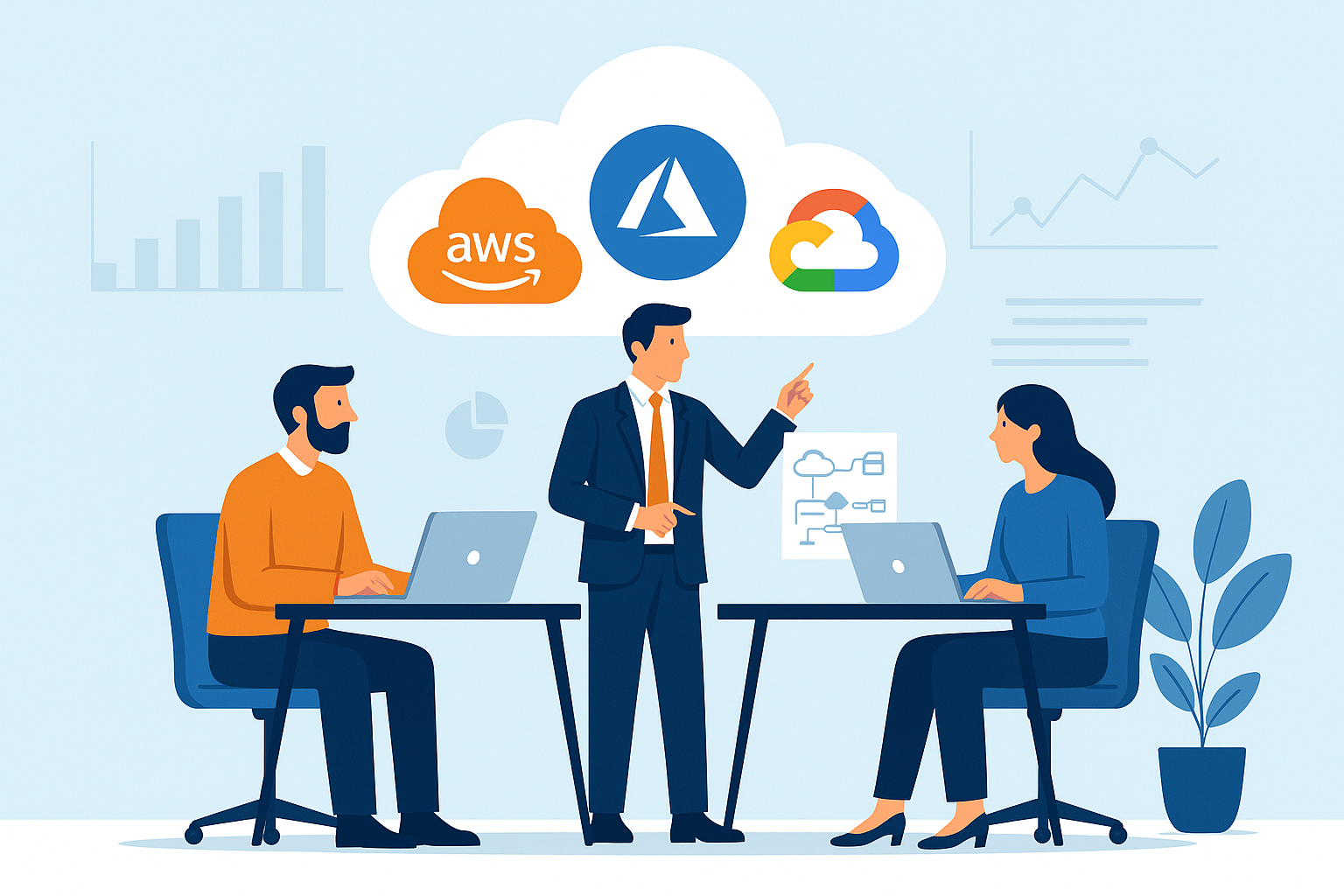
Amazon Web Services (AWS) is the most mature and widely adopted cloud platform.
Enterprises often choose AWS training when they:
CloudCamp’s AWS-focused programs emphasize hands-on learning—building pipelines, securing infrastructure, and managing cost optimization (FinOps) across distributed environments.
Microsoft Azure is ideal for organizations already using Microsoft technologies like Active Directory, Power BI, or .NET.
Azure’s strength lies in its seamless integration between infrastructure, data, and collaboration tools (M365, GitHub, Teams).
Azure training makes sense for teams that want to:
At CloudCamp, our Azure workshops focus on identity, governance, automation, and DevOps enablement within real enterprise contexts.
Google Cloud Platform (GCP) appeals to teams that want to innovate with data and machine learning.
Its ecosystem is built for scalability, open APIs, and modern analytics pipelines.
Corporate teams choose GCP training when they:
Our GCP sessions combine data engineering, MLOps, and DevOps integration to help teams turn innovation into business results.
In 2025, very few enterprises use just one cloud.
Multi-cloud strategies are the new normal, driven by:
That’s why CloudCamp builds cross-cloud fluency—teaching teams how to design, deploy, and manage workloads across AWS, Azure, and GCP.
The question isn’t Which cloud is best?—it’s Which cloud best fits your business strategy?
CloudCamp helps organizations evaluate their use cases, select the right platform mix, and train teams with real-world, production-grade labs.
Because in the modern enterprise, success doesn’t come from choosing one cloud—it comes from mastering them all.