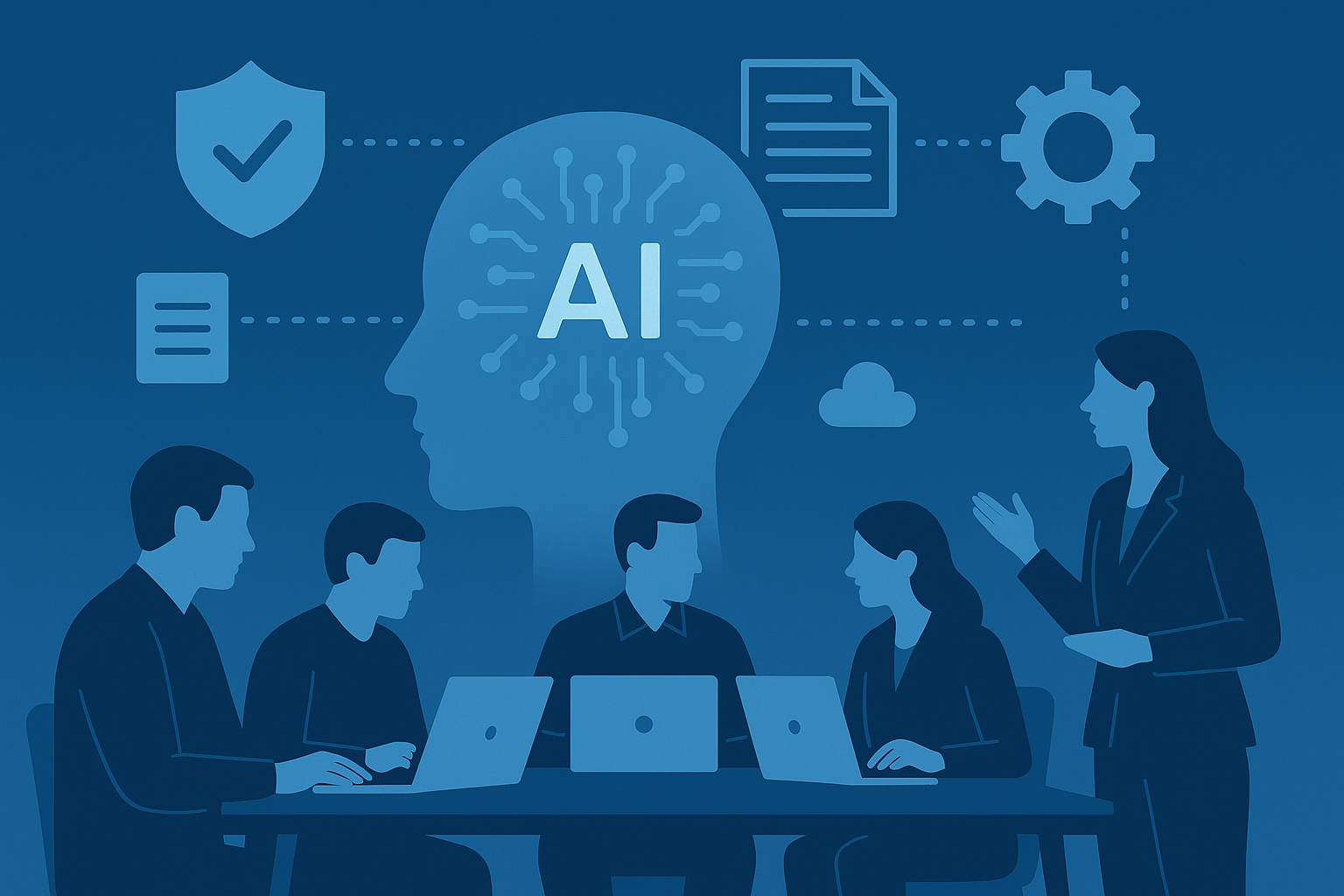
AI adoption is accelerating faster than any previous technology shift.
But here’s the uncomfortable truth:
Most enterprises are deploying AI without teaching their people how to govern it.
AI governance isn’t paperwork.
It’s capability.
And it requires training across the entire organization.
Many organizations try this:
“Write an AI policy → send it to the company → hope people follow it.”
No training.
No workflows.
No guardrails.
This almost guarantees:
AI governance only works when people are trained in how to apply it.
AI restructures decision-making in every workflow.
Teams must learn:
These skills cannot be assumed — they must be taught.
AI governance = decision governance, not document governance.
Here’s what organizations forget:
AI governance is role-based.
RoleWhat Governance They Must LearnExecutivesrisk boundaries, regulatory alignment, ROI vs riskManagersworkflow approval, audit trails, human-in-loop stepsDevelopers/Engineersmodel validation, data lineage, safety testingBusiness Teamscorrect AI usage, escalation paths, limitationsSecurityAI threat models, prompt injection, data leakage risks
A single “AI training deck” does not prepare an organization.
When enterprises skip training:
AI governance is what prevents the entire organization from quietly drifting into unsafe usage.
The correct adoption order is:
1️⃣ AI Literacy
2️⃣ AI Governance Training
3️⃣ Workflow Redesign
4️⃣ Model/tool adoption
5️⃣ Automation
Most organizations skip straight to step 4…
and then wonder why everything breaks.
Governance training is the operational foundation of enterprise AI.
AI governance is not about slowing innovation.
It’s about making AI safe, reliable, and scalable.
An enterprise that trains its people in AI governance:
AI governance training is the difference between controlled innovation and uncontrolled risk.